






We need to have a serious conversation about the most undervalued piece of furniture in your house. Most people treat the side table as an afterthought. You buy a sofa, you buy a bed, and then you grab whatever cheap, wobbly table fits in the leftover corner. This is a mistake. A weak side table choice ruins the flow of a room, forces you to reach awkwardly for your drink, and clutters your visual space.
We are not here to talk about “vibes.” We are here to talk about utility and engineering. A proper side table anchors your seating area, provides essential surface area, and balances the visual weight of heavy furniture. If you get this wrong, your living room looks messy and functions poorly. If you get it right, the room works with you.
In this guide, we will break down the exact ratios, materials, and layout strategies you need. We are ignoring the fluff found on other blogs. We focus on what works.
The Physics of Comfort: Why Height and Scale Matter
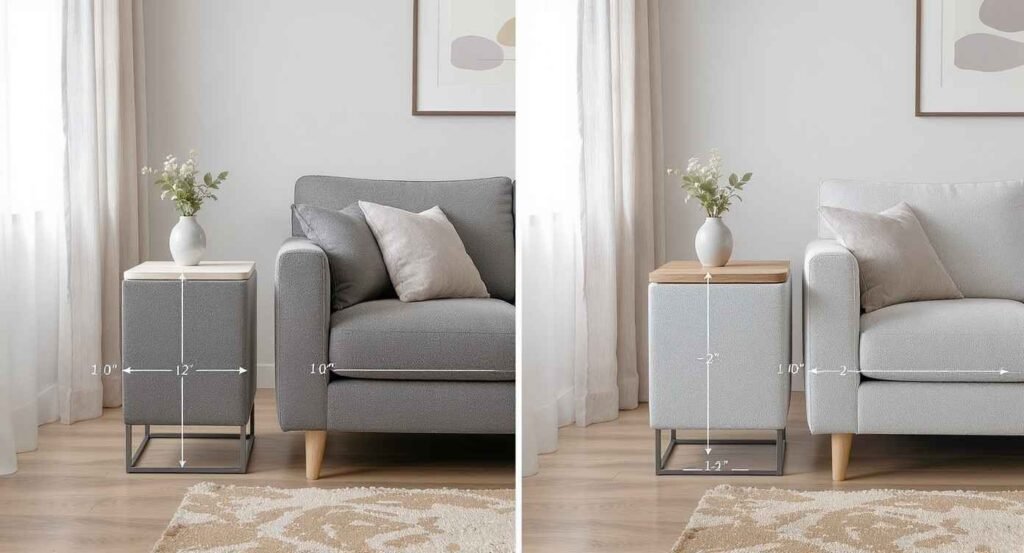
You cannot buy a side table based on a picture alone. You must buy it based on math. The relationship between your seating and your table is critical for ergonomics. If the table is too high, you knock your elbow against it. If it is too low, you strain your back reaching for your phone.
The Two-Inch Rule
We follow a strict rule in interior layout: The Rule of Reach. Your side table surface must be within two inches of your sofa arm’s height.
- Standard Sofa Arms: Most modern sofa arms sit between 24 and 26 inches high. You need a table that stands 22 to 28 inches tall.
- Low-Profile Furniture: If you own a contemporary, low-slung Italian sofa, a standard side table will look ridiculous and loom over you. You must hunt for small side table options that sit lower, around 16 to 18 inches.
- The Tolerance: The table should be slightly lower than the arm (1-2 inches) than taller. A taller table visually boxes you in and creates an uncomfortable “fenced-in” feeling while sitting.
Depth and Visual Weight
Height is only one dimension. We also see people fail with depth. If your sofa is 40 inches deep, do not put a tiny, spindly 12-inch round table next to it. It looks like a toy. The side table needs to hold its own against the bulk of the sofa.
- The Depth Ratio: Aim for a table depth that matches the depth of the sofa. It does not need to reach the front edge of the cushions, but it should cover at least 75% of the arm’s depth.
- Visual Mass: A chunky leather sectional requires a solid block table or a heavy wood piece. A light, airy linen loveseat pairs better with a glass or metal frame. Match the mass, not just the colour.
Material Durability: Don’t Buy Trash
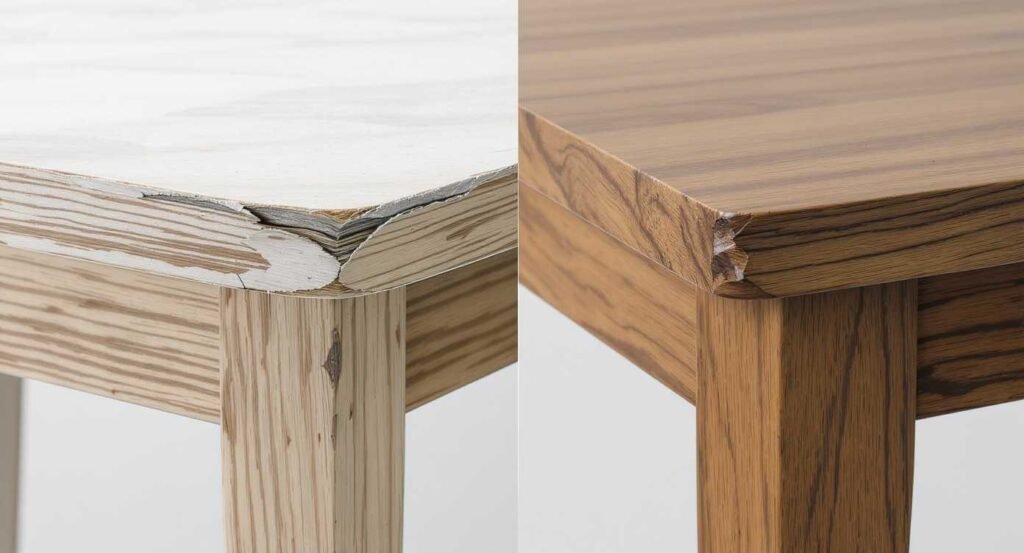
We are tired of seeing people buy “trendy” tables that look terrible after six months. Furniture must survive real life. Your side table will host hot coffee mugs, sweating glasses of ice water, heavy lamps, and scratching keys. If you choose the wrong material, you are wasting money.
Wood vs. Veneer
Solid wood is durable but reactive. It swells with humidity and stains if you don’t seal it. However, it can be sanded and fixed. Veneer is cheaper and more stable, but impossible to repair. Once you chip the edge of a veneer table, it is garbage. For a high-traffic side table for the living room, we recommend solid hardwoods like oak or walnut. Avoid soft pine; it dents if you look at it wrong.
The Case for Stone and Glass
If you hate using coasters, stop buying wood. Buy stone or glass.
- Marble and Travertine: These are porous. Acidic drinks like wine or orange juice will etch the surface instantly. If you want the stone look without the panic, get sealed quartz or a composite.
- Glass and Metal: A side table with gold accents and a glass top is a classic move for smaller rooms. Glass takes up zero “visual space,” making the room feel larger. It is impervious to water rings. However, it collects dust and fingerprints like a magnet. You must wipe it down daily.
Metal Finishes
Cheap gold plating flakes off. If you want a side table with gold, check the build quality. Look for powder-coated steel or solid brass. Plated iron often rusts in humid climates. Test the finish by scratching a hidden spot with your fingernail. If it marks, walk away.
The Living Room Ecosystem
Your living room is a machine for living. The side table living room setup drives the function of that machine. You cannot just place tables randomly. You must plan the traffic flow.
Styling the “Floating” Layout
If your sofa floats in the middle of the room (off the walls), your side tables act as anchors. They define the perimeter of the “conversation zone.” In this layout, you must ensure the tables do not block the walkway.
Clearance Zones
Keep at least 18 inches of clearance around the table for walking. If you cannot fit a standard square table, switch to a small side table with a round footprint. Curves are easier to navigate around than sharp corners.
Nesting Tables: The Pro Move
We love nesting tables. They are the Swiss Army knife of furniture. A set of nesting tables gives you a primary surface for a lamp and a secondary, pull-out surface for a guest’s drink. When you don’t need the second surface, it disappears. This is the smartest way to add surface area without permanently cluttering the floor plan.
The “Table with Sides”
A table with sides, often called a tray table, is excellent for messy households. The raised edge prevents pens, marbles, or spilt drinks from hitting the carpet. These are particularly useful in homes with pets or small children, as they contain the chaos.
Bedroom Side Tables: The Nightstand Distinction
Do not confuse a living room table with a bedside table. They have different jobs. A living room table is for display and temporary storage. A bedroom side table is for permanent storage and access.
Height Relative to the Mattress
In the bedroom, the Rule of Reach changes. Your bedside tables should be level with the top of your mattress.
- Too High: You will hit your face on the corner of the table if you roll over.
- Too Low: You will knock your glass of water over trying to reach it in the dark.
- Mattress Trends: Mattresses are getting thicker. Measuring your specific bed height (frame + box spring + mattress) is mandatory before buying tables. Do not guess.
Storage vs. Aesthetics
We see sleek, minimalist tables in magazines that have zero drawers. This is impractical for real life. You need a place for chargers, lotions, books, and medications. We demand at least one drawer for bedroom side tables. If you choose an open table, you must use a basket or box to contain the clutter. Visual noise next to your head disrupts sleep. Keep the surface clear.
Styling: The Anti-Clutter Protocol
We are ruthless about clutter. A side table is not a dumping ground. It is a functional display.
The Rule of Three
Limit the items on your table to three.
- Vertical Element: A lamp or tall vase. This adds height.
- Horizontal Element: A stack of two or three books. This grounds the table.
- Sculptural Element: A small object, bowl, or plant. This adds texture. Do not add more. If you add a fourth item, remove one.
Lighting Considerations
A massive table lamp on a small side table leaves no room for a coffee cup. This is a failure of design.
- Scale the Lamp: The lamp base should occupy no more than 30% of the table surface.
- Wall Sconces: If your table is tiny (under 15 inches wide), install a wall sconce or a floor lamp behind it. Free up the surface for daily use.
Trends for 2026: What We Are Seeing
We are forecasting specific shifts for the upcoming year.
Biophilic Design
We are moving away from cold, sharp industrial metals. Expect to see chunky, organic wood tables with live edges.
Bold Curves
Sharp rectangles are out. Small side table designs are becoming cylindrical or mushroom-shaped. These “chubby” furniture pieces add softness to a room full of square lines.
Color Injection
Neutral tables are safe, but boring. We see a rise in high-gloss lacquer tables in oxblood, ochre, and deep forest green. A colourful side table is a low-risk way to add punch to a room.
Analysing Your Space: A Step-by-Step Checklist
Before you click “buy,” go through this checklist. We force our clients to do this, and it saves them from returns.
- Measure the Arm: What is the exact height of your sofa arm?
- Measure the Gap: How much floor space exists between the sofa and the wall/next chair?
- Check the Light: Will this table sit in direct sunlight? If yes, avoid cheap dyed veneers that will fade.
- Traffic Test: Tape the outline of the table on the floor with painter’s tape. Walk around it for a day. Does it annoy you? If yes, buy a smaller one.
Conclusion
A side table is a tool. When you select the right one, you solve problems of storage, lighting, and comfort. When you pick the wrong one, you create friction in your daily life. We want you to stop buying based on impulse and start buying based on requirements. Measure your height. Check your materials. Enforce the clutter limits.
If you follow these rules, your space will look finished and professional. If you ignore them, you will have just another messy room with wobbly furniture. The choice is yours.
FAQs
What is the standard height for a side table?
There is no single “standard” height because it depends on your seating. However, most side tables range between 22 and 26 inches tall. The critical number is your sofa arm height. The table should be within two inches of that measurement.
Can I mix and match bedroom side tables?
Yes, but you must be careful. Mismatched bedside tables can look curated or chaotic. To make it work, keep one element consistent. If the tables are different shapes (one round, one square), ensure they are the same material or colour. If they are different materials, keep them at the same height.
How do I style a side table with gold without it looking tacky?
Gold acts as jewellery for the room. The secret is moderation. Use a side table with gold legs but a stone or glass top to dilute the shine. Avoid pairing it with too many other metallic finishes in the room. Matte gold or brushed brass looks more sophisticated and expensive than shiny, mirror-finish gold.
Do I need a side table on both sides of the sofa?
Not necessarily. Symmetry is traditional, but not mandatory. If one side of your sofa is against a wall or a high-traffic walkway, you might skip the table there. However, every seat in the room needs a surface within reach. If you can’t fit a side table, use a coffee table or a small drink table that slides under the sofa.
What is the best material for a family with kids?
Avoid glass and sharp metal corners. They are dangerous and fragile. The best option is a round wood table or a metal drum table. These have no sharp edges to injure children, and durable finishes can take a beating. A table with sides (tray top) is also excellent for containing spills before they hit the rug.
How big should a side table be for a living room?
A standard side table living room size is roughly 20×20 inches. For smaller apartments, you can find “drink tables” as small as 10 inches in diameter. Just ensure the surface is large enough to hold the items you actually use (phone, drink, remote). If it can’t hold those three things, it is useless.
