






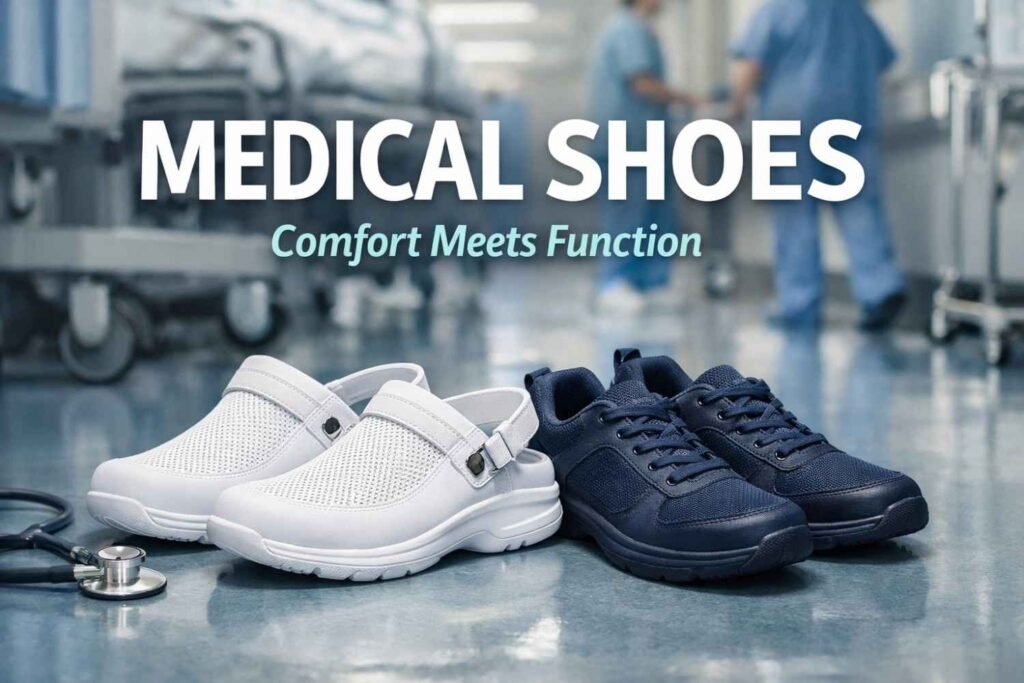
Choosing the right footwear is a direct investment in your health and daily productivity. For health-conscious individuals and professionals in Saudi Arabia who spend long hours on their feet, standard shoes often fall short. This guide explains medical shoes, a category designed where comfort meets essential function. We will cover what makes these shoes different, their key benefits, and how to select the best pair for your lifestyle and needs.
What Are Medical Shoes and Who Needs Them?
Medical shoes are footwear specifically engineered to support foot health, alleviate pain, and improve comfort during extended wear. They are not just for those with diagnosed conditions; they are a proactive choice for anyone whose daily routine demands reliable support.
Defining Medical vs. Orthopedic and Comfort Shoes
It is important to understand the distinctions. Orthopedic shoes are often custom-made or prescribed to address specific medical diagnoses like severe bunions, diabetes-related foot issues, or post-surgical recovery. are their more accessible, over-the-counter cousins, incorporating therapeutic features like advanced arch support and cushioning for general wellness. While all comfort shoes aim to feel good, medical shoes integrate structured, podiatrist-informed design elements that actively promote foot health beyond simple softness.
Key Signs You Should Consider Medical Footwear
You may need medical shoes if you regularly experience foot fatigue, arch or heel pain after standing, or general discomfort in your knees or lower back. Other signs include noticing excessive wear on the inside or outside of your current shoes, which can indicate poor gait alignment. Professionals like nurses, teachers, retail workers, and anyone with an active lifestyle in Saudi Arabia can benefit significantly from this supportive footwear.
Essential Features of Quality Medical Shoes
Not all supportive shoes are created equal. True medical shoes are built around several non-negotiable features that work together to protect your feet.
Superior Arch Support and Cushioning Systems
The foundation of any good medical shoe is its arch support. This support should match the natural contour of your foot to distribute weight evenly and reduce strain on the plantar fascia. Combined with this, high-quality cushioning systems—often using materials like memory foam or specialized gels—absorb impact with each step. This dual approach of support and cushion is critical for all-day comfort.
Breathable Materials and Roomy Toe Box Design
Foot health requires a good environment. Quality medical shoes use breathable uppers, such as mesh or treated leather, to allow air circulation and prevent moisture buildup. Equally important is a roomy, rounded toe box. This design gives your toes space to splay naturally with each step, reducing pressure on the joints and helping to prevent conditions like hammertoes or ingrown nails.
Adjustable Closures for a Secure, Custom Fit
A perfect fit is not static; it can change throughout the day due to swelling. This is why adjustable closures are a hallmark of functional medical shoes. Features like hook-and-loop straps, lace-up designs, or buckles let you fine-tune the fit across the instep and ankle. This ensures your foot is held securely without being constricted, providing stability and preventing slippage that can lead to blisters or strain.
Benefits of Wearing Medical Shoes for Long Hours
The right medical shoes do more than just make your feet feel better. They create a positive chain reaction throughout your body, especially for those with demanding schedules.
Reducing Foot Fatigue and Joint Pain
When your feet are properly supported and cushioned, the muscles and ligaments do not have to work as hard to stabilize you. This directly reduces the feeling of heavy, tired feet at the end of a long shift or day. By improving alignment, medical shoes also minimize abnormal stress on the ankles, knees, and hips, which can alleviate associated joint pain.
Improving Posture and Overall Body Alignment
Your feet are the base of your entire skeletal structure. Shoes that cause your feet to roll inward (overpronate) or outward (supinate) can throw your knees, hips, and spine out of alignment. Medical shoes with structured support help maintain a neutral foot position. This promotes a straighter, more natural posture, reducing back strain and muscle fatigue throughout the core.
Preventing Common Foot Conditions
Consistently wearing supportive footwear is a powerful preventive measure. By providing stability and reducing pressure points, medical shoes can help prevent the development of plantar fasciitis, metatarsalgia (ball-of-foot pain), and tendonitis. The roomy design also safeguards against corns, calluses, and bunions caused by cramped toe boxes.
How to Choose the Best Medical Shoes for Your Needs
Selecting the ideal pair of medical shoes requires a thoughtful assessment of your personal requirements. A methodical approach ensures you get the support you need.
Assessing Your Daily Activities and Foot Type
Start by considering where and how you will wear the shoes. A healthcare professional who walks on hard floors needs maximum cushioning and slip resistance. Someone who stands in one place might prioritize support over mobility. Next, understand your foot type: flat feet need motion control and firm arch support, while high arches require more focused cushioning. You can perform a simple wet foot test at home to see your footprint pattern.
Key Fit and Sizing Considerations
Always shop for medical shoes in the afternoon or evening, as feet naturally swell during the day. There should be about a thumb’s width of space between your longest toe and the end of the shoe. Width is crucial; your foot should not spill over the sides of the sole. Walk around the store on different surfaces, if possible, to test for any pinching or slippage in the heel.
Top Brands and Models for Professionals
Several brands have built strong reputations in the therapeutic footwear space. Brands like Dansko, Clarks, and Hoka are known for combining clinical features with professional styling. When evaluating models, look for those with the APMA (American Podiatric Medical Association) Seal of Acceptance, which indicates they are beneficial to foot health. Making a smart investment in quality medical shoes is similar to choosing a reliable device for daily use; it’s about value and performance over time, much like considering the features of a Samsung Galaxy A21s for its balance of functionality and affordability.
Medical Shoes for Different Lifestyles in Saudi Arabia
The climate and professional culture in Saudi Arabia demand specific considerations. Fortunately, modern medical shoes come in styles suited for various settings.
Best Options for Healthcare and Service Professionals
For nurses, doctors, and service industry staff, closed-toe designs with non-slip, fluid-resistant soles are essential. Look for clogs or athletic-inspired styles made from easy-to-clean materials. Breathability is key in the regional climate to keep feet cool and dry during long, busy shifts.
Stylish Medical Shoes for Everyday Wear
The idea that medical shoes are unattractive is outdated. Many brands now offer loafers, ballet flats, and casual sneakers that look like fashionable comfort shoes but contain all the supportive technology. These are perfect for office environments, shopping, or social occasions where you want to maintain a polished appearance without sacrificing foot health.
Durable Footwear for Active and Outdoor Use
For walking, light hiking, or outdoor activities, choose medical shoes with rugged outsoles for traction and enhanced stability features. Water-resistant options are useful, and ensuring the shoe has adequate ankle support can prevent twists and sprains on uneven ground.
Common Mistakes When Buying Medical Shoes
Avoiding these frequent errors will help you get the full value and benefit from your purchase.
Prioritizing Style Over Support and Fit
Choosing a shoe based solely on its appearance is the most common mistake. A shoe must have the correct structural features for your feet first. Style is a secondary factor that can be satisfied within the wide range of available medical shoes and orthopedic shoes today.
Ignoring the Importance of Proper Sizing
Do not assume your size is the same across all brands or even all styles within a brand. Your shoe size can change over time. Always have your feet measured professionally and try on both shoes, as one foot is often slightly larger than the other.
Not Replacing Worn-Out Shoes Timely
Even the best medical shoes lose their supportive properties. The cushioning compresses and the midsole breaks down, often before the outer sole shows significant wear. Continuing to use worn-out shoes negates all their health benefits and can lead to pain.
Caring for Your Medical Shoes to Maximize Longevity
Proper maintenance protects your investment and ensures the shoes perform as intended for their full lifespan.
Daily Cleaning and Maintenance Routines
Wipe down leather or synthetic uppers with a damp cloth. For fabric or mesh, use a soft brush to remove dirt. Allow shoes to air dry naturally away from direct heat sources, which can break down materials. Using a shoe horn when putting them on preserves the heel counter’s structure.
When to Replace Insoles and Other Components
The removable insoles in many medical shoes typically wear out first. Replacing them with new, supportive insoles can refresh the shoe’s comfort. Also, monitor the tread on the outsole and the flexibility of the midsole. If the shoe bends too easily in the middle or the heel is visibly worn down, it is time for a new pair.
Find Your Perfect Pair for Lasting Comfort
Your journey to better foot health starts with the right information and a commitment to choosing footwear that truly supports you. Explore reputable brands, prioritize fit and function, and experience the difference that properly designed medical shoes can make in your daily comfort and long-term well-being.
Conclusion: Investing in Your Foot Health
Medical shoes are a practical and impactful choice for long-term wellness. They bridge the gap between everyday footwear and clinical need, offering proven support that reduces pain, improves posture, and prevents injury. By understanding the features, benefits, and selection criteria, you can make an informed decision that supports your active life in Saudi Arabia.
FAQs?
Are orthopedic shoes and medical shoes the same thing?
Not exactly. Orthopedic shoes are often custom-designed for specific medical prescriptions or severe conditions. Medical shoes are generally available over-the-counter and are designed with therapeutic features for broader preventative care and comfort, though the terms are sometimes used interchangeably in retail.
Can medical shoes be fashionable for professional settings?
Yes. Modern design has transformed this category. Many brands now produce medical shoes that look like standard dress shoes, loafers, or sleek sneakers, making them completely appropriate and stylish for professional offices and business environments.
How often should I replace my medical shoes?
You should plan to replace your primary pair of medical shoes every 6 to 12 months if you wear them daily. The supportive materials degrade with use. A good rule is to monitor for new aches or pains, or if the shoes no longer feel as supportive as when they were new even if they still look fine.
